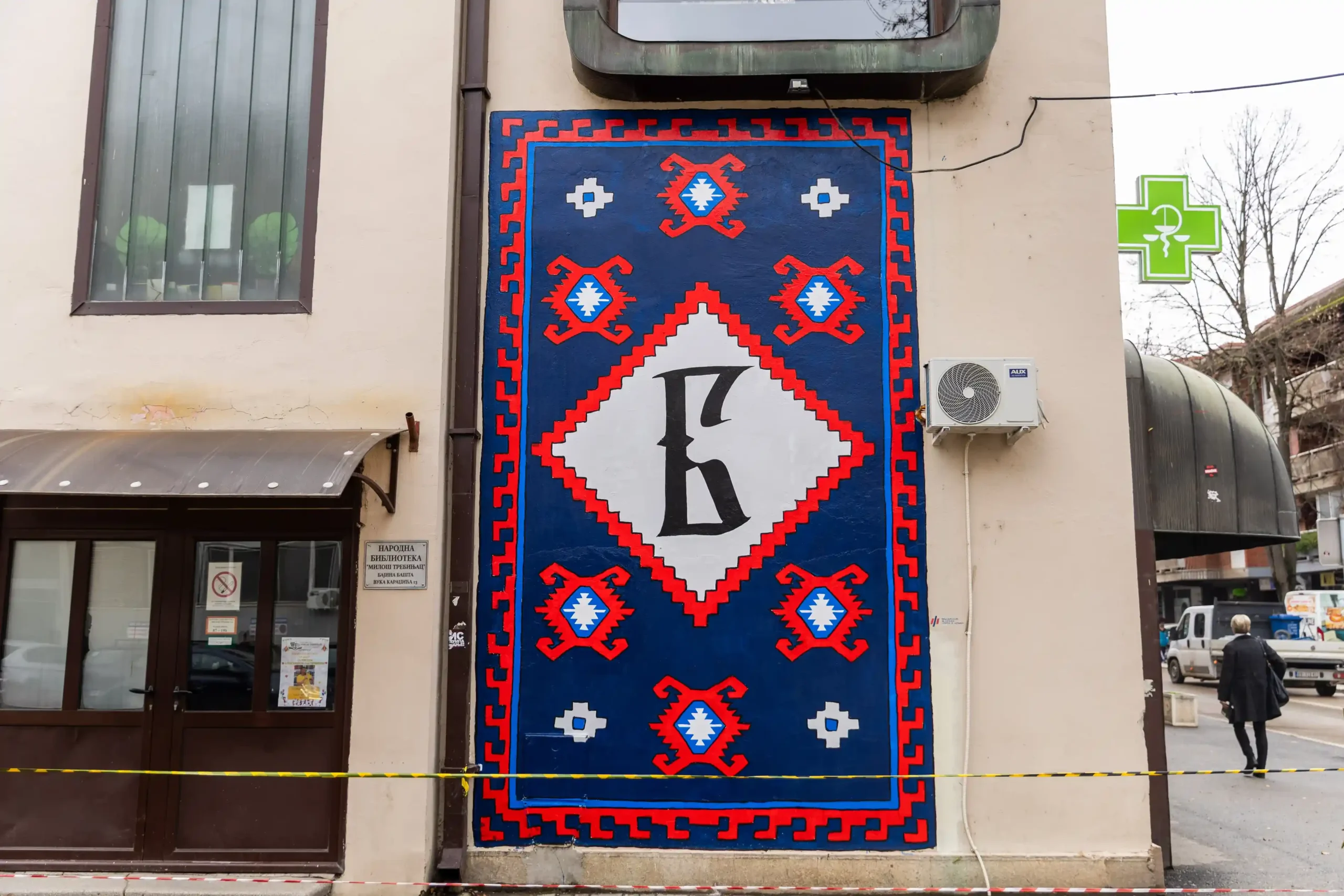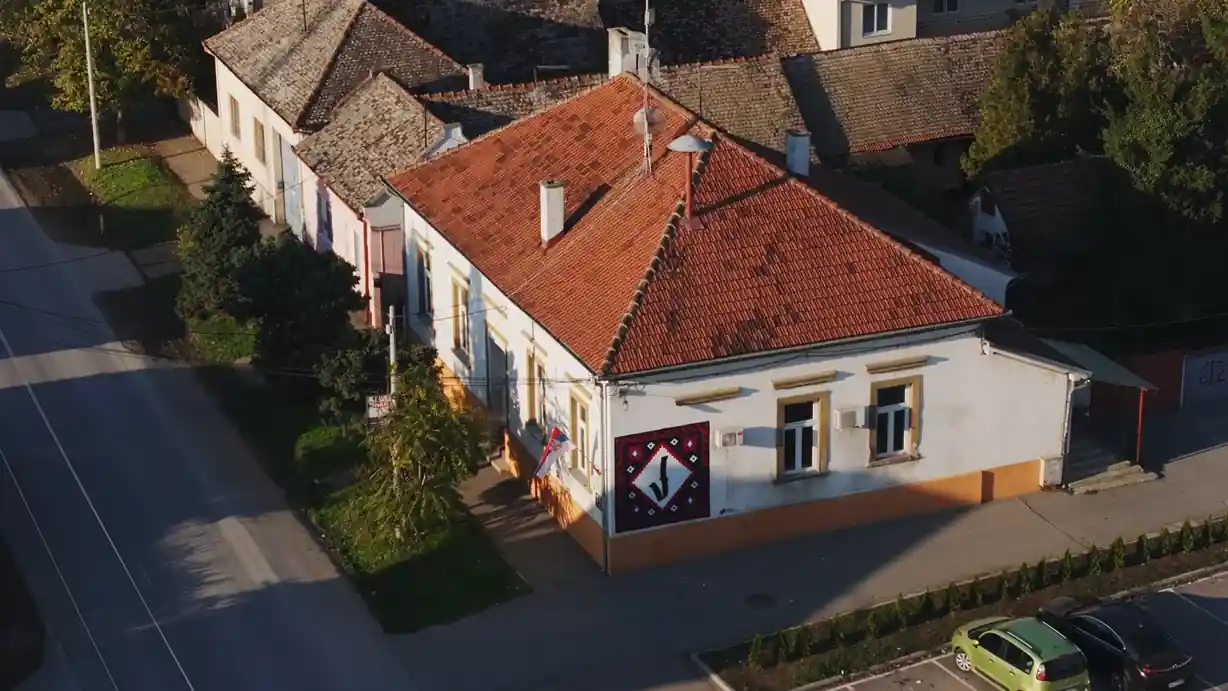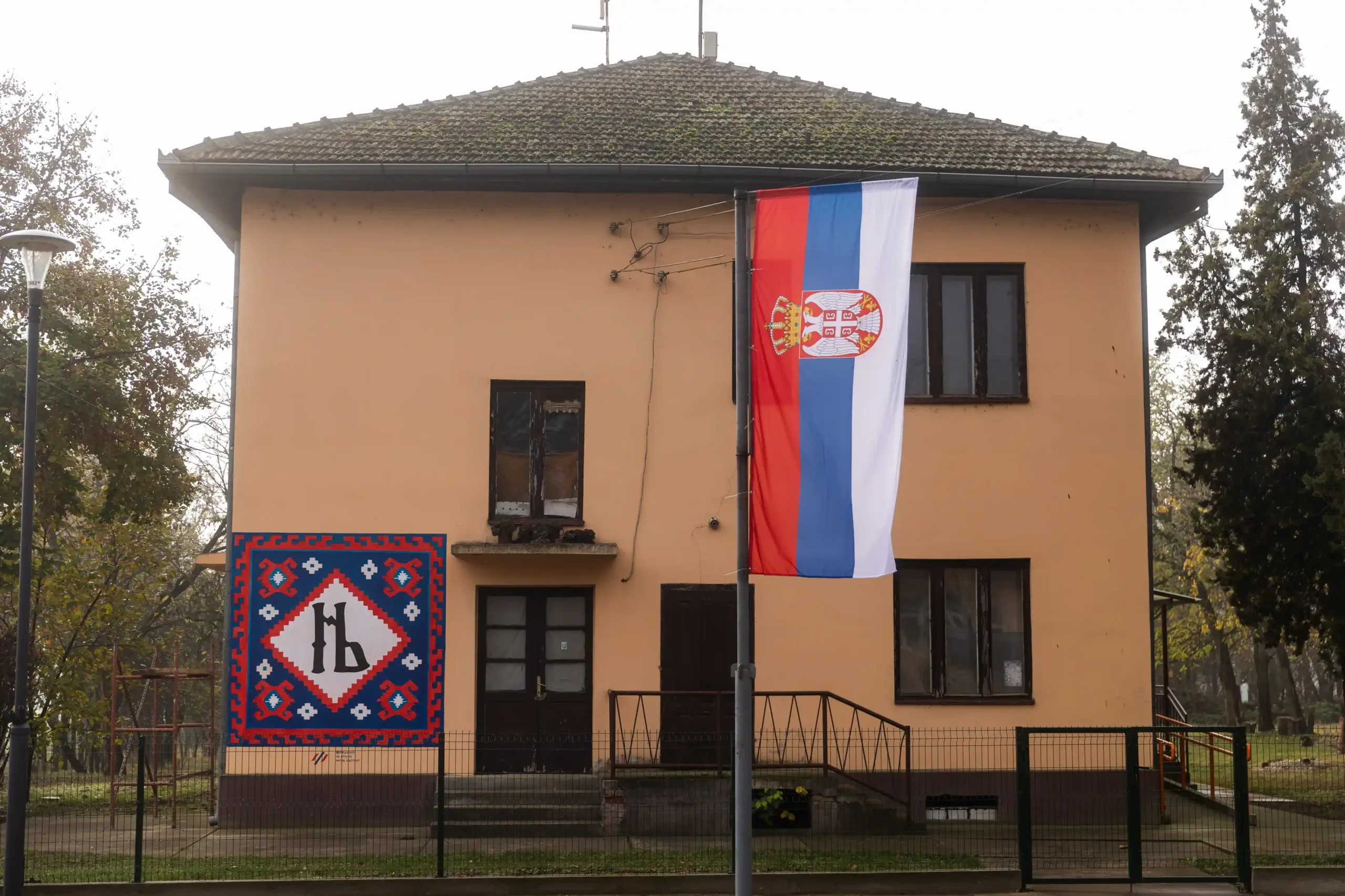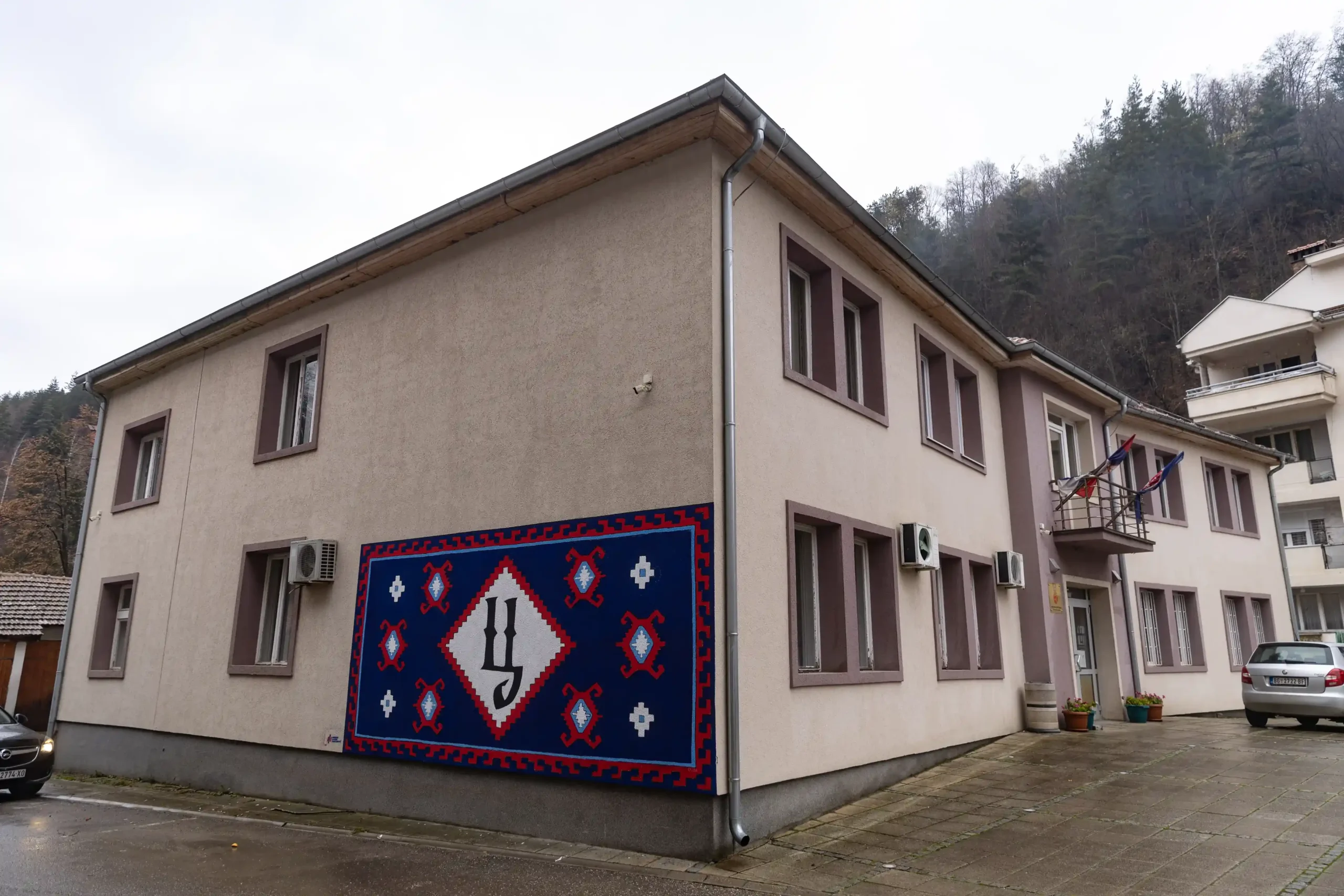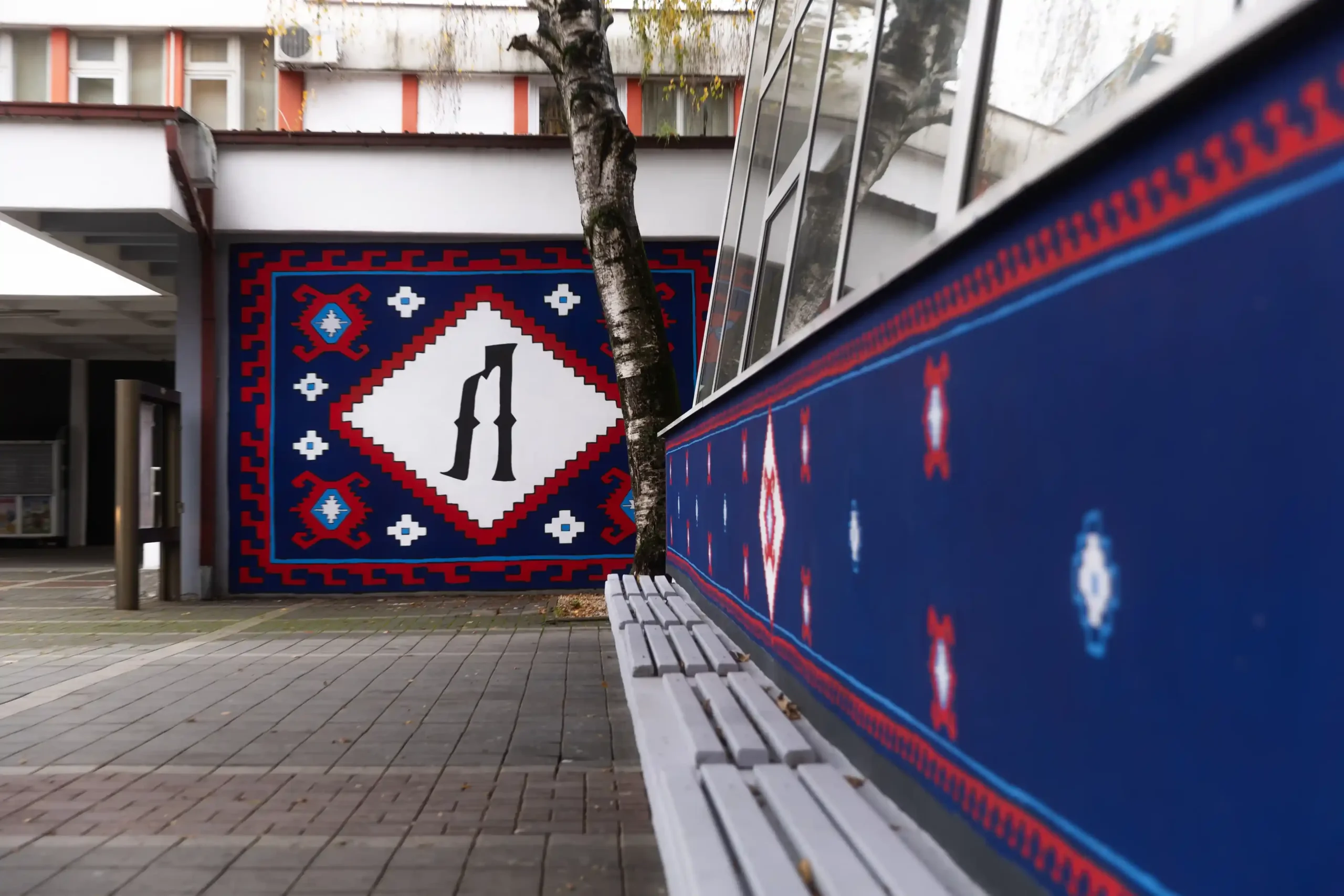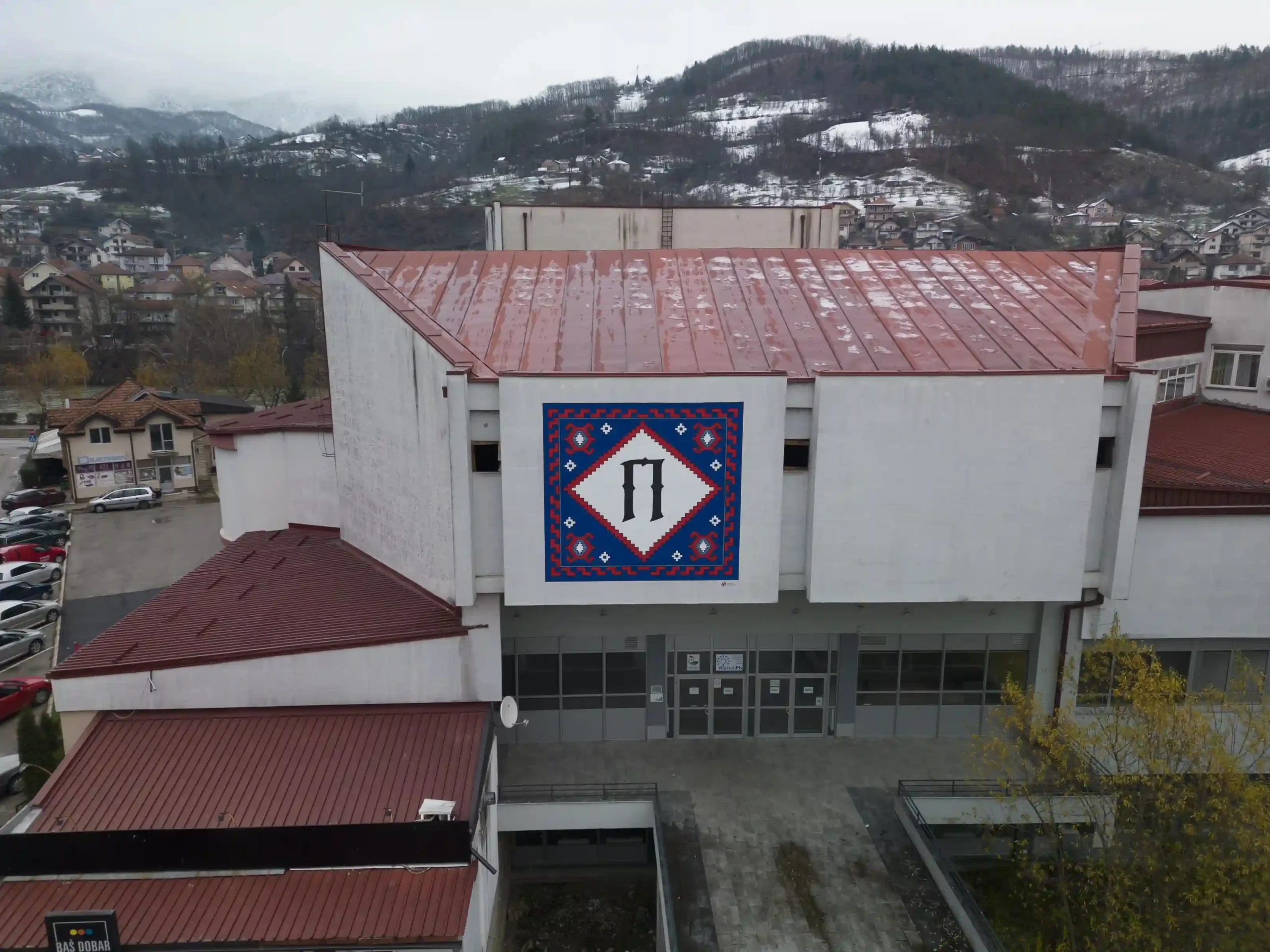

Twelve towns and communities across Serbia have today been enriched with artistic murals featuring Cyrillic letters as part of the project “Cyrillic Across Serbia,” implemented by the Foundation “For Serbian People and the State.” The initiative seeks to safeguard national identity through the promotion of our script and culture. In total, the initial letters of towns and villages will be symbolically painted in 30 locations throughout the country
Over the past decades, studies conducted by cultural institutions and linguistic associations have recorded a steady decline in the everyday use of Cyrillic, particularly among younger generations and in digital communication. The project “Cyrillic Across Serbia” aims to reverse this trend through art and educational cultural outreach.
The Cyrillic letterforms were created by renowned calligrapher Dušan Mišić, a graduate artist of ecclesiastical art, whose works dedicated to Serbian history and Orthodoxy are exhibited in galleries around the world and represent a refined synthesis of artistic expression and cultural heritage.
In the first phase of the project, Cyrillic letters were painted on the walls of schools, libraries, cultural centers, and local community buildings in Njegoševo, Čortanovci, Ub, Bajina Bašta, Priboj, Džurovo near Prijepolje, Crna Trava, Medveđa, Lebane, Đunis near Kruševac, Jakovo, and Opovo. Murals will soon appear in many additional locations across Serbia.
Cyrillic is one of the oldest living writing systems in Europe. According to historical sources, it was originated in the 9th century during the mission of Saints Cyril and Methodius and their disciples, and it has been used in Serbian tradition for more than a millennium. During the Middle Ages, the most important Serbian medieval charters, chrysobulls, and literary works from the Miroslav Gospel to Dušan’s Code were written in Cyrillic.
It is our duty to preserve Cyrillic, just as it has preserved us through the centuries. Cyrillic defines and identifies us as a people. Thanks in part to this script, we proudly bear the Serbian name today. This project allows especially younger generations to recognize the beauty of Cyrillic, understand its historical significance, and raise awareness of its value. Cyrillic is not merely a script it is a cultural code, the memory of a language, a link to tradition, and the visual identity of the Serbian nation. The project therefore represents an important artistic undertaking: a symbolic act of preserving and revitalizing heritage and an invitation to pass it on to future generations.
Under the Constitution of the Republic of Serbia, the Cyrillic script is defined as the official script of the Serbian language in public use..