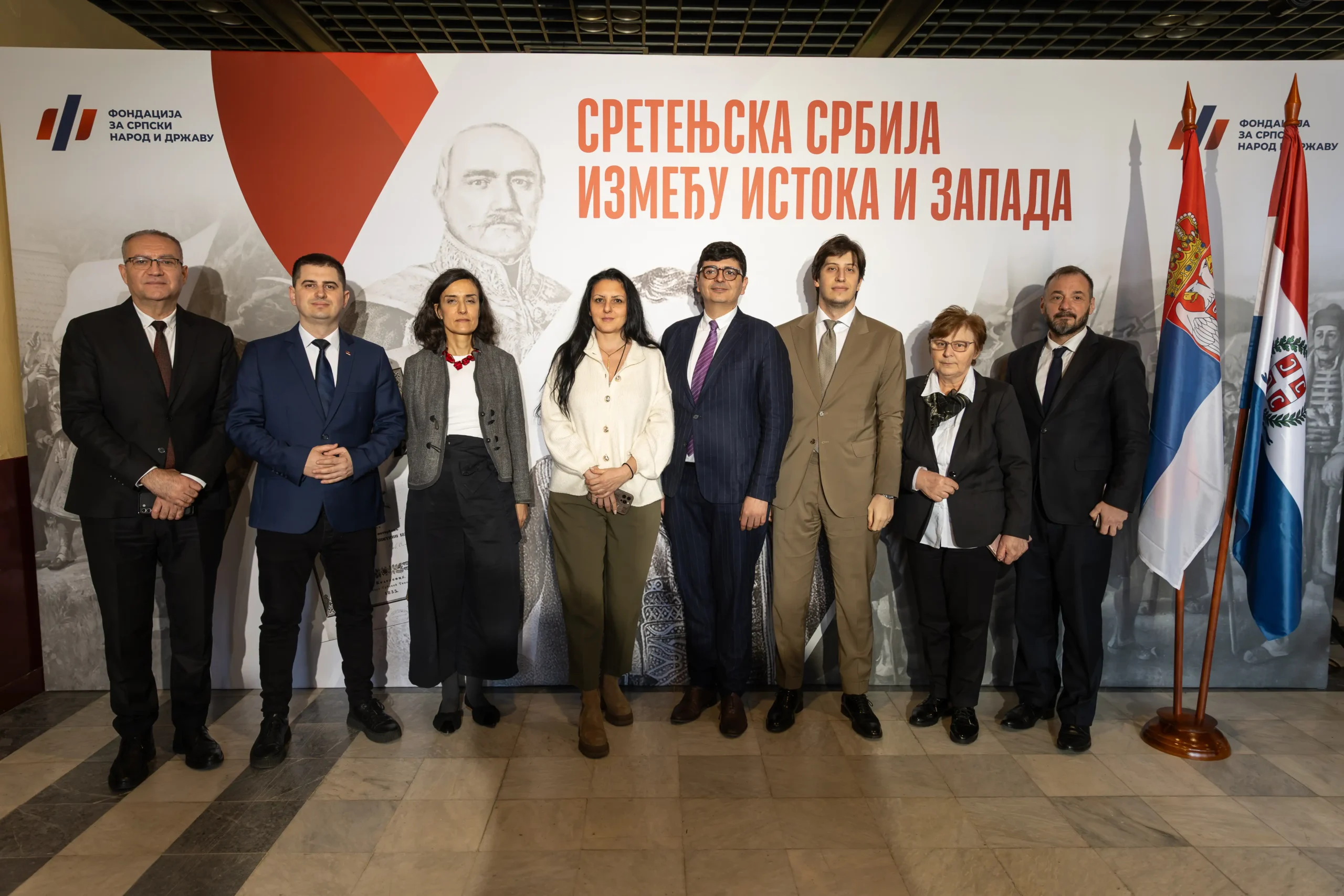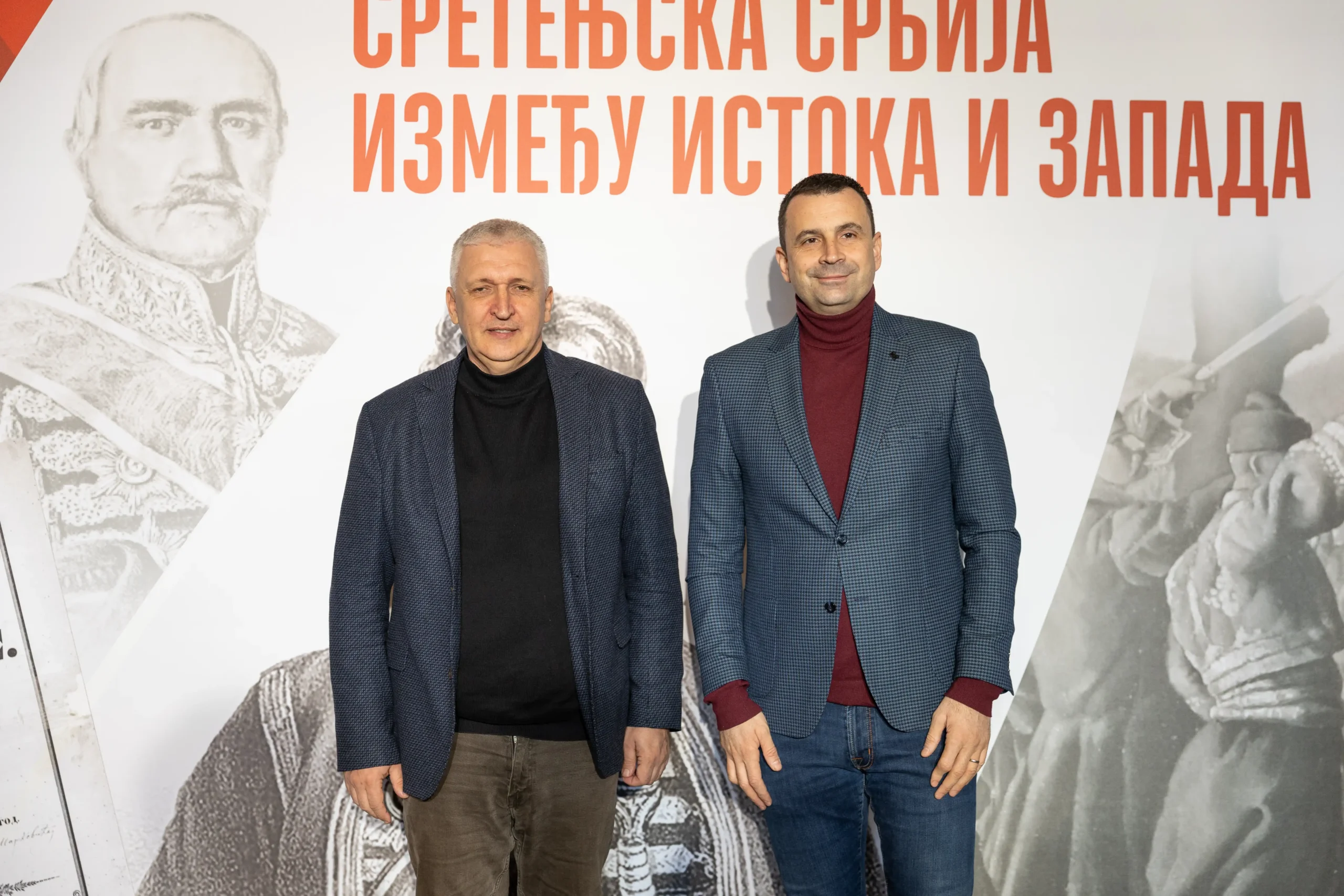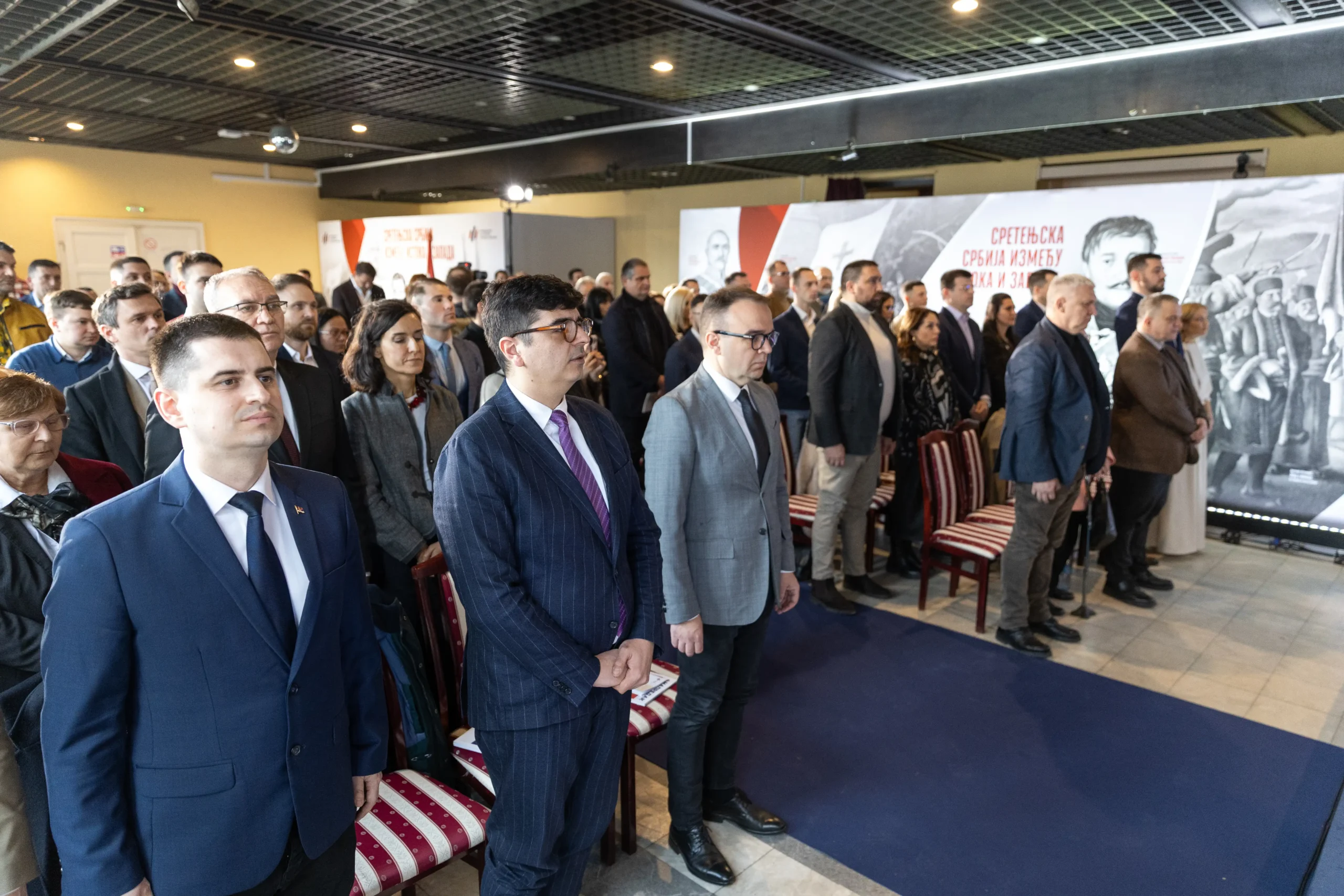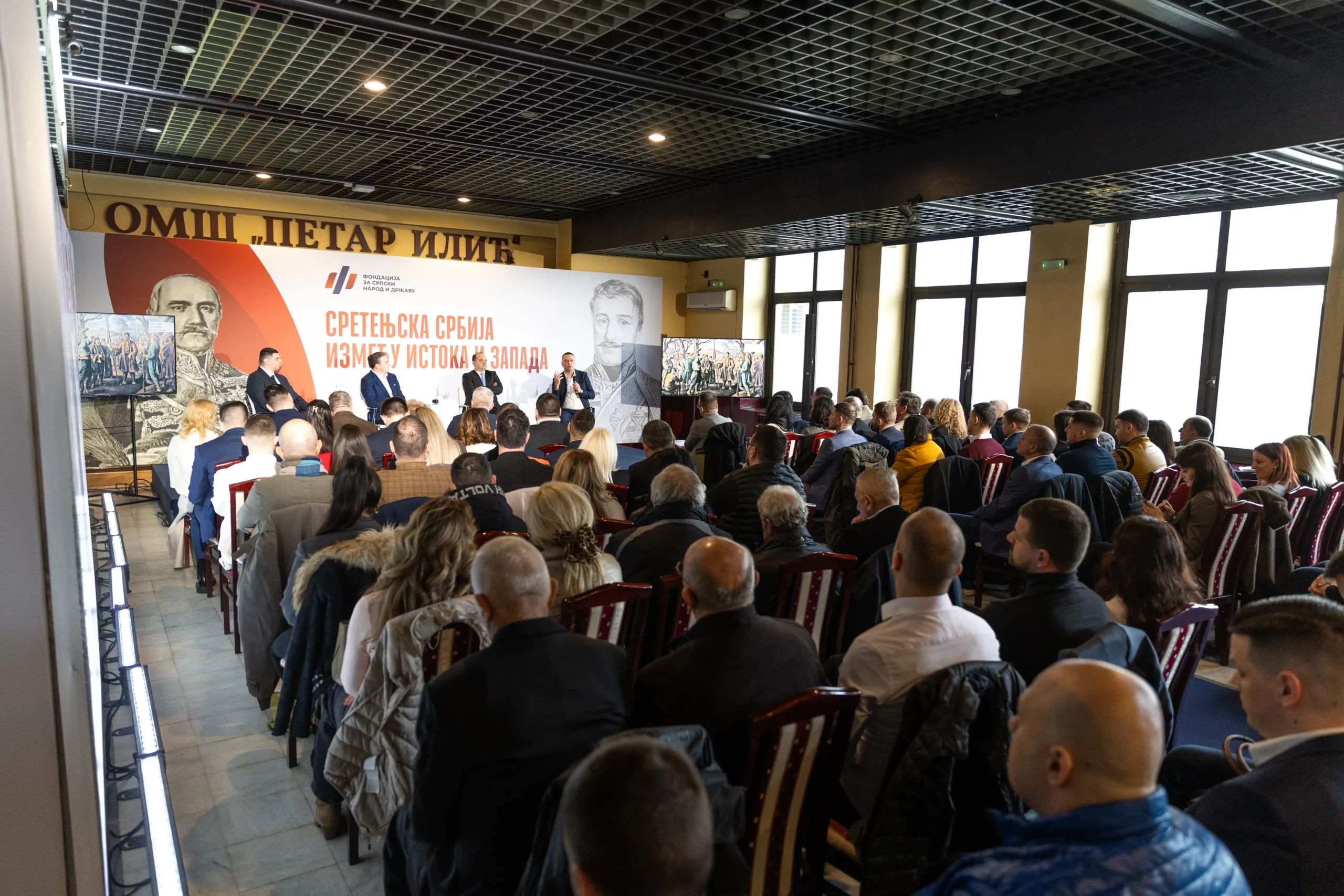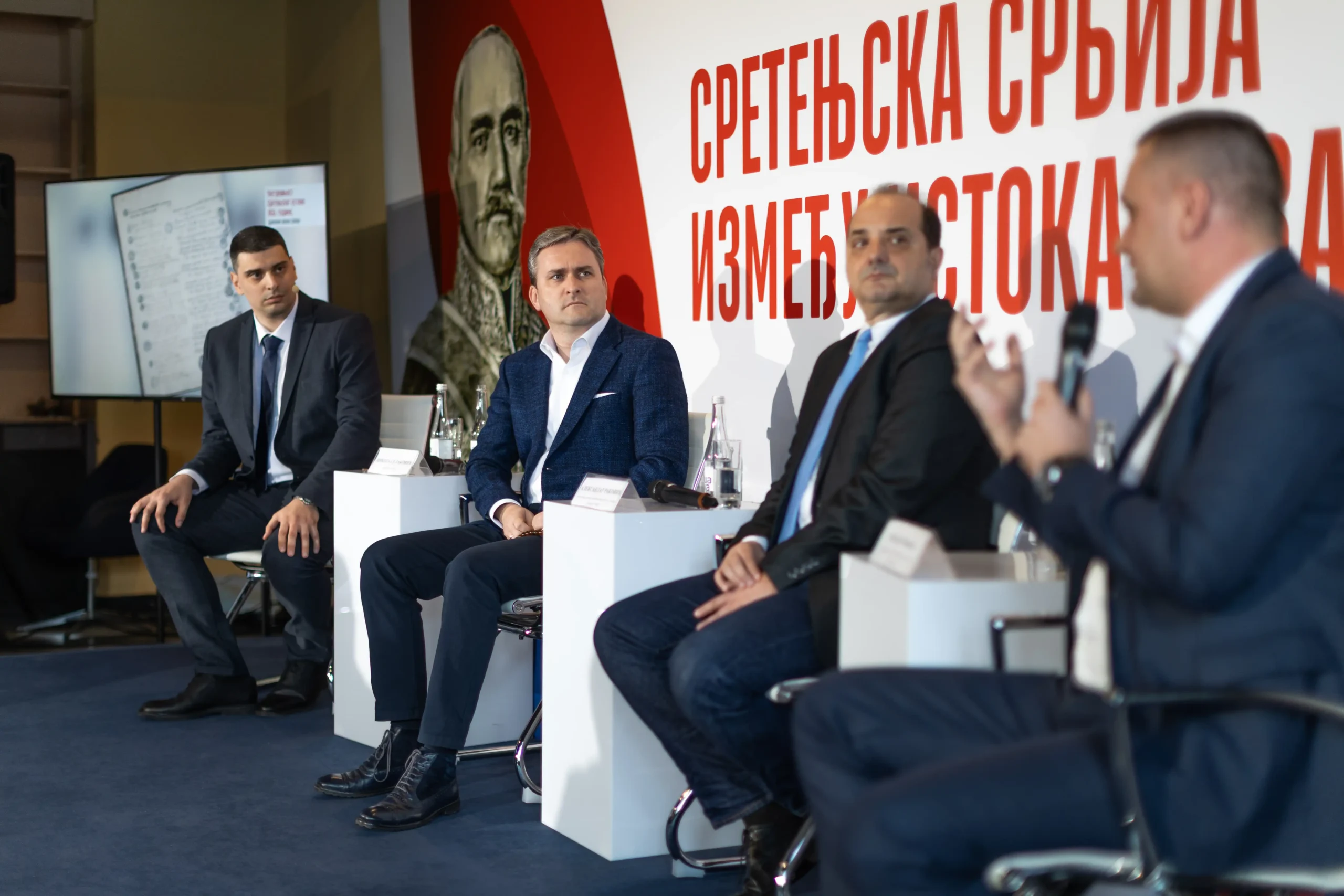

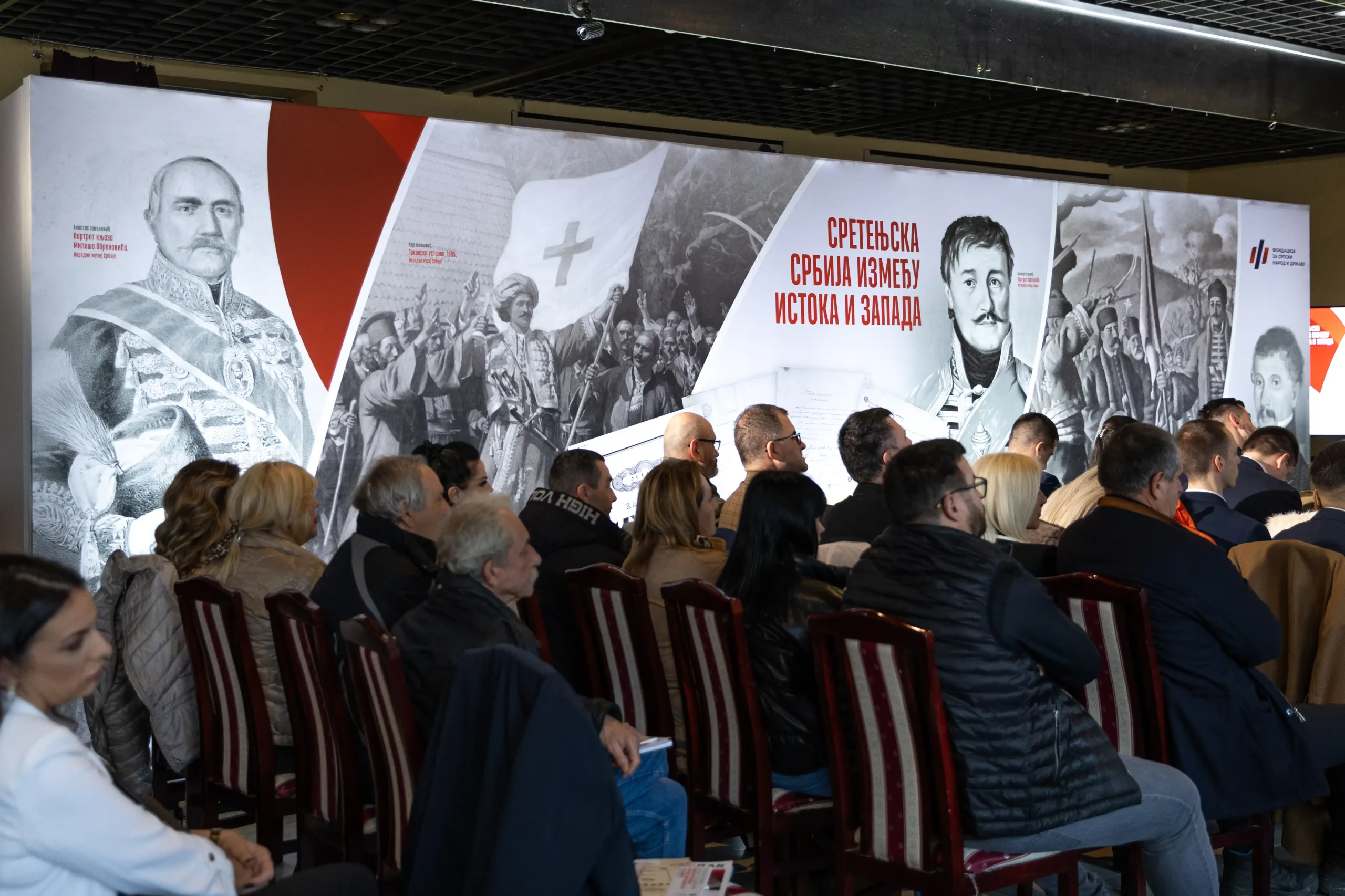
The panel discussion “Sretenje Serbia Between East and West”, organized by the Foundation For the Serbian People and State, was held in the concert hall of the “Petar Ilić” Primary Music School in Aranđelovac, as part of the broader Sretenje Gatherings marking Serbia’s Statehood Day.At the very outset, it is important to clarify that the concept of the Serbia of Sretenje does not merely refer to a historical date, but to a foundational moment in the formation of the Serbian state. It denotes the emergence of modern constitutional Serbia born at Sretenje a state shaped simultaneously by the struggle for liberation, the establishment of legal order, and the articulation of a national identity positioned between East and West. As such, it represents not only a historical milestone, but an enduring framework for understanding Serbia’s political and cultural trajectory.
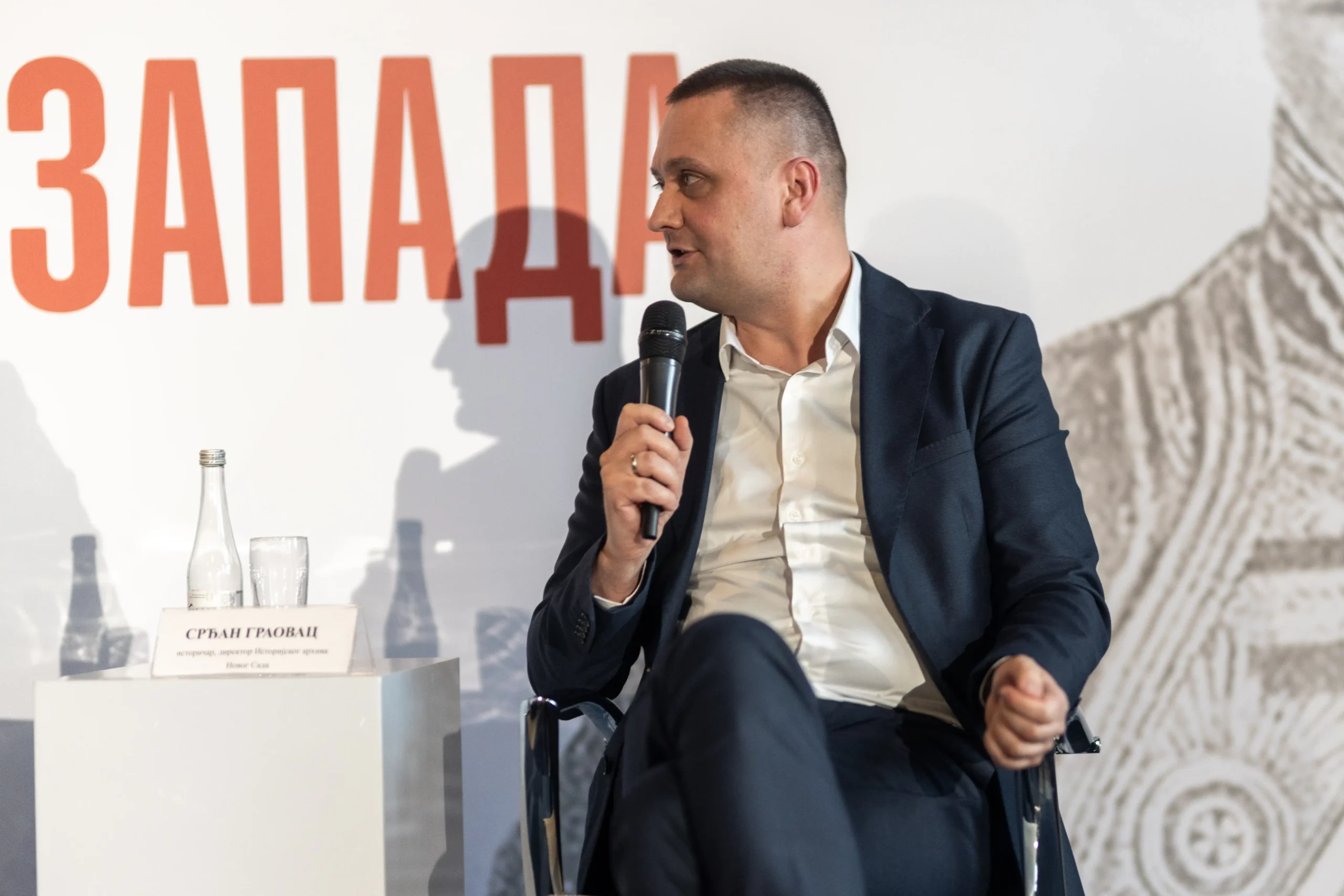
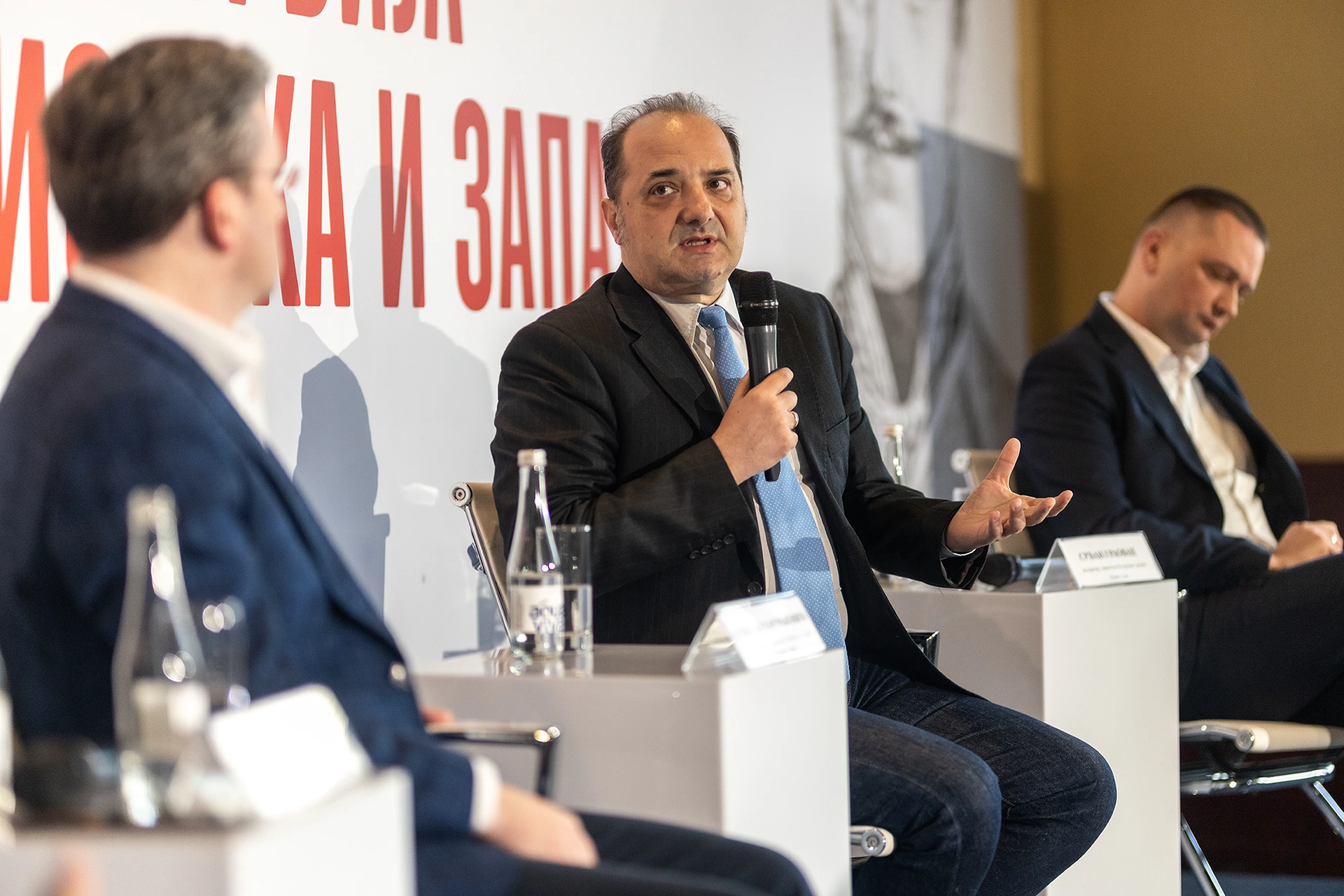
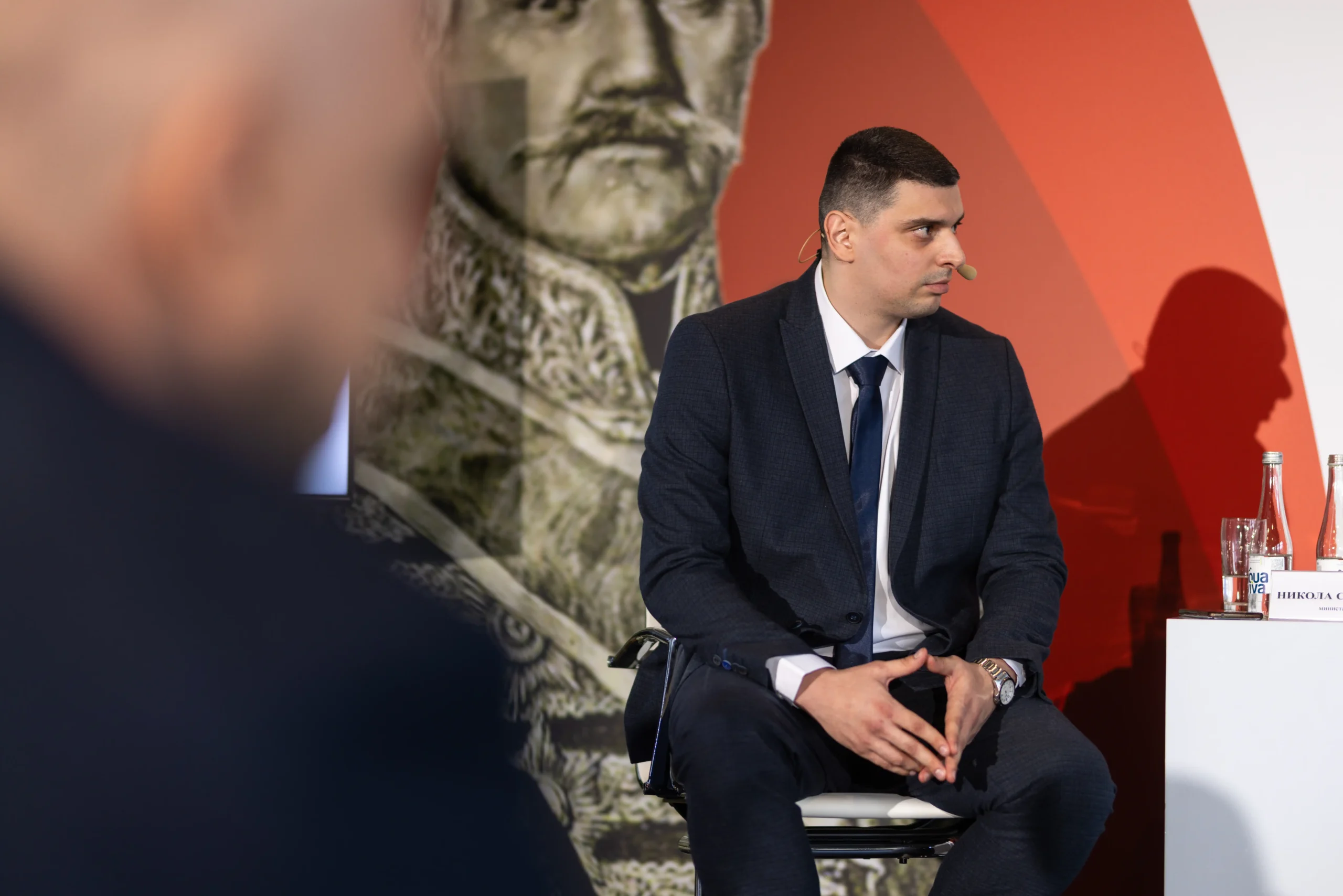
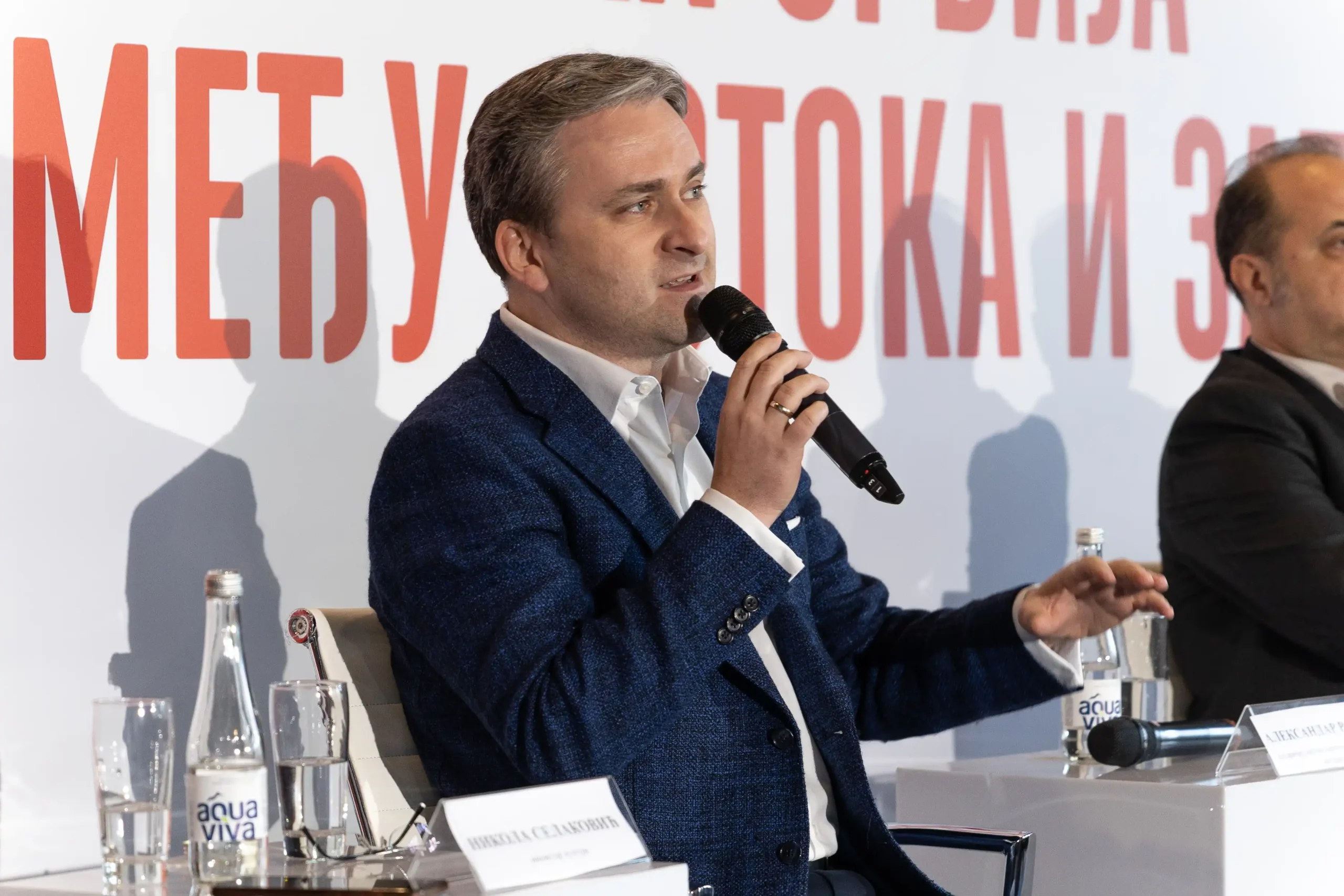
The event brought together citizens, representatives of public and cultural life, and a notable presence of young people, opening a space for informed dialogue and critical reflection on key moments of Serbian history, as well as on the contemporary challenges Serbia faces at the intersection of diverse civilizational, cultural, and geopolitical influences.The discussion featured Minister of Culture Nikola Selaković, historian and Senior Research Associate at the Institute for Recent History of Serbia Dr. Aleksandar Raković, and historian and Director of the Historical Archives of Novi Sad Srđan Graovac, while the panel was moderated by historian Bojan Čiča.Particular emphasis was placed on Sretenje as one of the pivotal points in Serbian history marking both the beginning of the First Serbian Uprising and the adoption of the Sretenje Constitution, thereby laying the institutional and symbolic foundations of modern statehood.
Participants underlined that it was precisely this dual legacy of tradition and modernity, of Eastern and Western influencesthat has continuously shaped Serbia’s state and national identity, positioning it as a society navigating complex historical inheritances and contemporary geopolitical realities.
“The educational system, along with cultural institutions, must be oriented toward the development and consolidation of cultural and national identity, particularly among younger generations. In that sense, nurturing a culture of remembrance is of fundamental importance. Culture serves as a key point of orientation both in the present and for the future,” emphasized Minister Selaković.The objective of such panels is to foster open and substantive dialogue, strengthen the culture of remembrance, and cultivate a sense of statehood especially among youth while contributing to a more nuanced understanding of Serbia’s role in today’s geopolitical landscape.
The Foundation For the Serbian People and State will continue to contribute, through similar programs, lectures, and public forums, to the preservation of national identity, historical memory, and the values that underpin contemporary Serbia.